Get Started on Your Pre-hair Transplant Journey Today
Our team is here to guide you, answer your questions, and support your goals every step of the way. Start now!
PRGF Therapy: Plasma Rich in Growth Factors Explained
PRGF Therapy: Plasma Rich in Growth Factors Explained
Plasma rich in growth factors (PRGF) is an advanced regenerative treatment derived entirely from your own blood/
It is widely utilized across diverse medical and aesthetic fields, including dentistry, orthopedics, ophthalmology, dermatology, and wound healing. While PRGF shares conceptual roots with platelet-rich plasma (PRP), it is manufactured through a uniquely standardized preparation protocol backed by distinct clinical research
This comprehensive guide explores the mechanics of PRGF, highlights how it differs from conventional PRP, and reviews key insights from international clinical studies. What Is PRGF?PRGF technology was pioneered by Dr. Eduardo Anitua in Vitoria-Gasteiz, Spain. One of its earliest documented clinical applications—preparing bone sites for optimized dental implant integration—was published in 1999 [1]. Globally, this proprietary technology is frequently commercialized under the name PRGF-Endoret.
Human platelets act as natural reservoirs for numerous bioactive proteins essential for tissue repair, most notably growth factors Extensive scientific literature confirms that autologous platelets serve as an exceptional physiological source of these regenerative molecules.
The primary clinical objective of PRGF therapy is to deliver a precise, highly concentrated dose of these growth factors directly to targeted tissue sites requiring healing.
How Is PRGF Prepared?
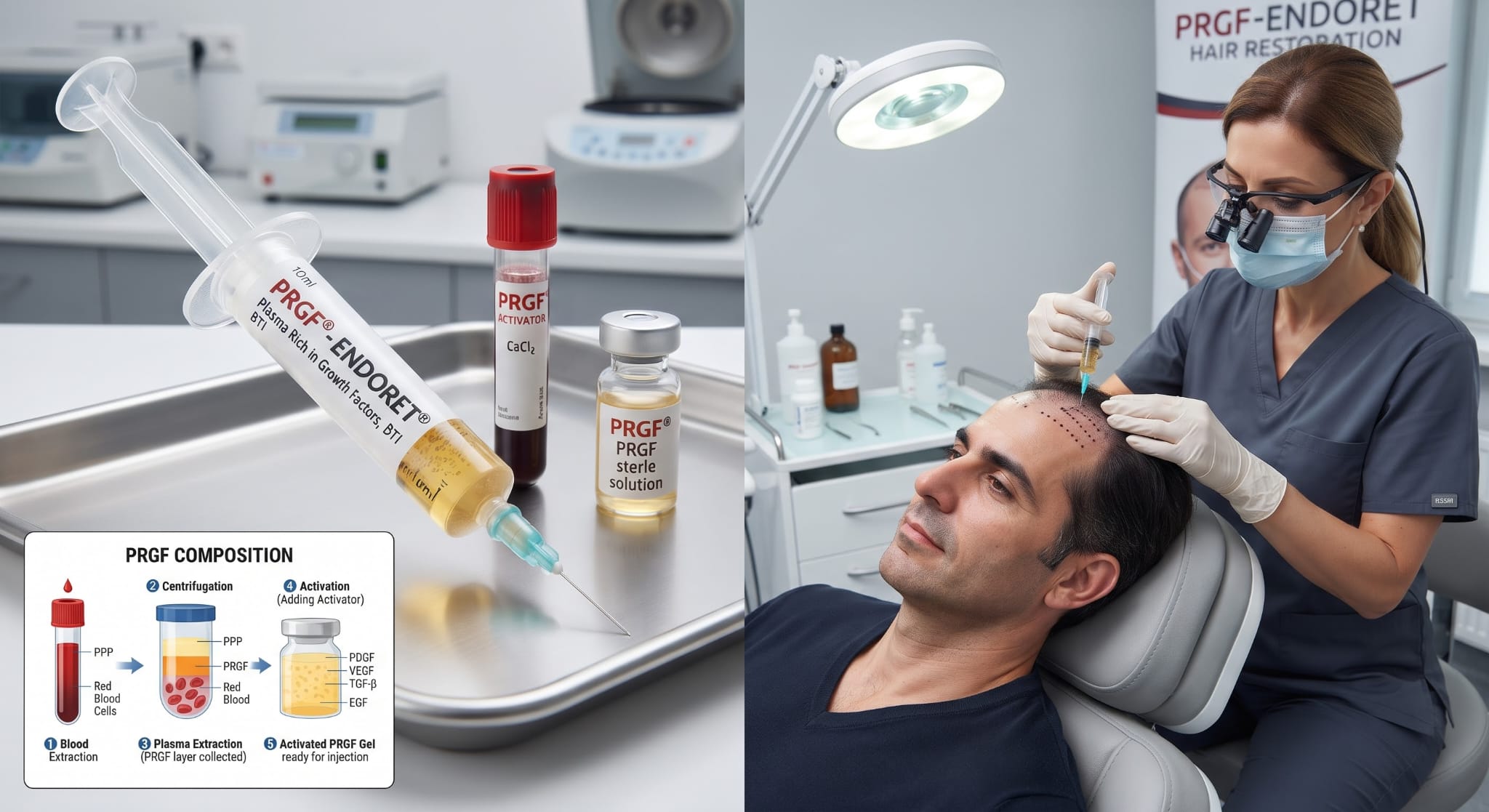
The preparation of PRGF follows a meticulous, controlled protocol designed to ensure maximum purity and therapeutic efficacy:Blood Draw: A small, safe sample of venous blood is collected from the patient’s arm into specialized tubes containing a citrate anticoagulant solution.Single-Spin Centrifugation: The collected blood tubes are placed in a precision centrifuge, where a single controlled spin separates cellular components. Red and white blood cells settle neatly at the bottom.Plasma Fractionation: The supernatant plasma is carefully collected and divided into distinct fractions. The topmost layer (F1) is platelet-poor plasma; the middle layer (F2) contains a moderate concentration of platelets; and the bottom fraction closest to the buffy coat (F3) is exceptionally rich in platelets.Controlled Activation: A precise amount of calcium chloride is introduced immediately prior to clinical application. This triggers physiological platelet activation and the subsequent sustained release of growth factors.Versatile Application: Depending on the target indication, the activated PRGF fraction can be administered as an injectable liquid, a bio-gel, a stable fibrin clot, or topical eye drops.
PRGF vs. PRP: What Is the Difference?Numerous platelet-rich preparations exist on the market, each utilizing varying preparation methods. The comparative table below outlines the key technological and compositional differences between standard PRP and PRGF-Endoret. Exact cellular concentrations vary depending on the specific kit and individual patient baseline parameters.Feature PRP (Typical) PRGF (Endoret) Full Name Platelet-Rich Plasma Plasma . Rich in Growth FactorsWhite Cells (Leukocytes) Frequently present, depending on system Strictly excluded / Not collected Red Blood Cells May carry over in minor amounts Completely excluded Collection MethodSingle platelet-concentrated volume Discrete plasma fractions (F1, F2, F3) Centrifugation Often requires 1 or 2 spins (system-dependent) Precise single controlled spinActivation ProtocolVariable; thrombin or no activation Calcium chloride, applied immediately before useTypical Platelet LevelApprox. 2 to 8x baseline Approx. 2 to 3x baseline in F3 (rich fraction)
The scientific team behind PRGF emphasizes that this technique successfully isolates therapeutic platelets while entirely eliminating pro-inflammatory white blood cells. Whether leukocyte exclusion translates to superior clinical outcomes depends heavily on the specific medical pathology being addressed, a subject of ongoing clinical debate among researchers.
What Is PRGF Used For?
Dentistry and Oral Surgery: Widely applied in tooth extraction sockets, alveolar bone regeneration, and dental implant site preparation to accelerate osseointegration Orthopedics and Sports Medicine: Utilized for targeted intra-articular injections in knee osteoarthritis and chronic tendinopathies. Ophthalmology: PRGF-based eye drops offer significant relief for severe dry eye syndrome and persistent corneal epithelial defects. Dermatology and Aesthetics: Employed for facial skin rejuvenation, advanced wound care management, and stimulating hair thinning restoration. Biomaterials Integration: Frequently combined with synthetic bone grafts and surgical scaffolds to enhance structural stability and tissue healing.
What Do International Studies Say?
Knee OsteoarthritisA landmark randomized clinical trial involving 176 patients with symptomatic knee osteoarthritis compared a course of three intra-articular PRGF-Endoret injections against three hyaluronic acid injections [5]. The findings revealed that a significantly higher percentage of patients in the PRGF cohort achieved at least a 50% reduction in reported pain scores. However, aggregate WOMAC scores measuring pain, stiffness, and physical function showed no statistically significant divergence between the two treatment groups . A secondary randomized controlled trial similarly evaluated PRGF-Endoret injections against Durolane (a single-injection high-molecular-weight hyaluronic acid) in symptomatic osteoarthritis patients . Dental and Bone Healing Ever since the pioneering 1999 publication, PRGF has been extensively investigated in extraction socket management and implant dentistry, with modern clinical reviews confirming its robust synergy with contemporary biomaterials .A Balanced Scientific Perspective A substantial portion of published PRGF research originates from the foundational development group. To further solidify its clinical standing, independent multi-center trials, larger sample sizes, and direct head-to-head comparisons with diverse PRP methodologies are highly encouraged. Furthermore, clinical outcomes across all platelet-rich biological therapies naturally vary depending on patient physiological profiles and standardized preparation protocols.
Frequently Asked Questions
What does PRGF stand for? PRGF stands for plasma rich in growth factors. It is an autologous, plasma-based therapeutic preparation derived entirely from your own blood, utilizing concentrated platelets as its primary bioactive engine.Is PRGF identical to PRP? While related, they are distinct technologies. Both concentrate autologous platelets, but PRGF is specifically engineered to be completely free of red and white blood cells and is fractionated precisely. Is PRGF safe? Because PRGF utilizes your own autologous blood, the risks of allergic hypersensitivity or disease transmission are virtually eliminated when performed under strict sterile conditions. Mild injection-site discomfort or swelling may occasionally occur. How many treatment sessions will I require? The required number of sessions depends entirely on the specific medical condition being treated. Your specialist will formulate a personalized treatment schedule after a comprehensive assessment. Can PRGF cure arthritis or restore lost hair? No therapeutic intervention can offer absolute guarantees. Clinical studies demonstrate meaningful symptom relief and tissue regeneration in many patients, though individual results vary. Book Your PRGF Consultation Want to discover if PRGF therapy is the right solution for your aesthetic or medical needs? Contact today to schedule a consultation with our qualified specialists.
[Book an appointment] +905411365478
References[1] Anitua E. Plasma rich in growth factors: preliminary results of use in the preparation of future sites for implants. Int J Oral Maxillofac Implants. 1999;14(4):529-535.[2] Anitua E, Andia I, Ardanza B, Nurden P, Nurden AT. Autologous platelets as a source of proteins for healing and tissue regeneration. Thromb Haemost. 2004;91(1):4-15.[3] Anitua E, Sanchez M, Prado R, Orive G. The P makes the difference in plasma rich in growth factors (PRGF) technology. Platelets. 2011;22(6):473-474.[4] Anitua E, Tejero R, Alkhraisat MH, Orive G. Platelet-rich plasma to improve the bio-functionality of biomaterials. BioDrugs. 2013;27(2):97-111.[5] Sanchez M, Fiz N, Azofra J, et al. A randomized clinical trial evaluating plasma rich in growth factors (PRGF-Endoret) versus hyaluronic acid in the short-term treatment of symptomatic knee osteoarthritis. Arthroscopy. 2012;28(8):1070-1078.[6] Vaquerizo V, Plasencia MA, Arribas I, et al. Comparison of intra-articular injections of plasma rich in growth factors (PRGF-Endoret) versus Durolane hyaluronic acid in the treatment of patients with symptomatic osteoarthritis: a randomized controlled trial.
- Concentrated Growth Factors
PRGF therapy uses concentrated platelets and growth factors from your own blood to nourish hair follicles and support natural-looking hair density.
- Gradual Growth Factor Release
Unlike standard plasma preparations, PRGF forms a fibrin matrix designed for a controlled, sustained release of growth factors around the follicles.
- Minimally Invasive Scalp Session
The procedure involves a quick blood sample, gentle processing, and targeted micro-injections into thinning areas with no surgery or stitches.
- Supports Hair Thinning & Shedding
Many people exploring non-surgical hair restoration look into PRGF to support follicle vitality during early-stage thinning or seasonal shedding.
Quick Return to Daily Routine
Most individuals resume normal daily activities right after their appointment, with only minor, short-lived scalp redness or sensitivity.


At Istanbul Hair Consultant, we provide independent pre-transplant hair guidance with a focus on clarity, honesty, and personalized care.
Contact Us
- +9054-1136-5478
- www.isthairconsult.com.tr
- [email protected]
- Home
- About Us
- Consultation Areas
- Book Now
- Privacy Policy
- Terms and Conditions
- Refund Policy